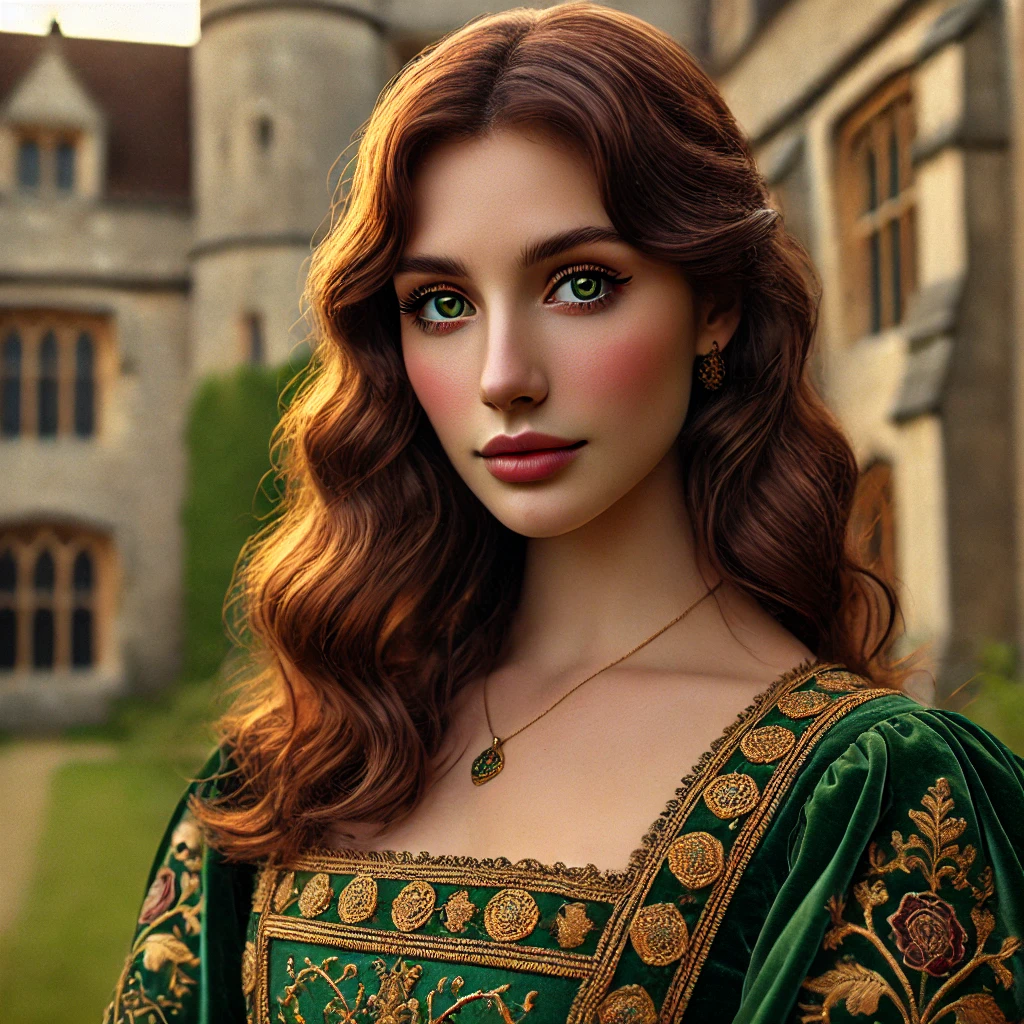
The Tale of High Haven
The year was 1196. The Great Flood had devastated the village of Teston, washing away homes, livestock, and the hopes of countless families. Among the survivors stood Guy de Peine, a battle-hardened knight who had served under King Richard the Lionheart, and Lady Abilene de Berham, the last of her noble family line.
The floodwaters had just begun to recede when Guy and Abilene were summoned to court. There, King Richard presented them with an unexpected gift: the deed to High Haven, an abandoned estate perched atop a ridge overlooking the Medway River. Once a glorious manor house dating back to Saxon times, High Haven had fallen into disrepair over generations, its stones bearing silent witness to the rise and fall of noble houses before it.
And so began the remarkable journey of the Berham-Peine union. Together, they did not merely rebuild an estate; they forged a legacy. High Haven became more than stone and mortar—it transformed into a symbol of resilience, a beacon of hope for all who had lost everything in the flood.
The restoration of High Haven was arduous. Guy oversaw the quarrying of new stone, while Abilene, with her keen eye for beauty and proportion, designed gardens that would later become renowned throughout Kent. Their efforts attracted skilled craftsmen, farmers, and merchants who settled in the shadow of High Haven's walls, gradually bringing life back to the devastated region.
The Secrets of Blood and Faith
What few knew was that both Guy and Abilene carried burdens from their past. Guy had been among the knights who stood by at Canterbury Cathedral in 1170 when Thomas Becket was murdered. Though he had not raised his sword against the Archbishop, his silence that fateful day haunted him. His service to King Richard had been an attempt at atonement, fighting in the Holy Land to seek redemption for his cowardice.
Abilene harbored a different secret. Through her mother's line, she was distantly descended from Sibyl of Falaise, the acknowledged niece (but rumored illegitimate daughter) of King Henry I. This royal blood had been both blessing and curse for the Berham family, granting them status while also making them targets during times of political turmoil.
Together, they raised two children: John Marshall, a boy with his father's strength and his mother's compassion, and Helena, whose beauty and wisdom would later make her the most sought-after bride in three counties. The children grew up listening to tales of their ancestors' triumphs and failures, learning that nobility came not from birth alone but from one's actions.
As High Haven flourished, so too did its reputation as a place of justice and learning. Abilene established a small library of precious manuscripts, while Guy trained young men in the arts of war but also in the principles of honor and duty. They created not just a home but a way of life that would influence generations to come.